Large Living Room Wall Art — Revamp Your Space
Recently, I visited my friend Sarah’s apartment in the Central area of Hong Kong and almost didn’t recognize the place. The same plain white walls that once seemed cold and empty now projected warmth, depth, and character. What changed? She had finally committed to oversized living room wall art — a beautiful piece from West Elm’s catalog that stretched across her main wall.
I couldn’t believe at how one piece of oversized wall decor could change the entire energy of her space. The abstract canvas in deep blues and golds didn’t just occupy the space; it established an interior design focal point that pulled everything together. Her budget-friendly IKEA sofa suddenly looked elevated in style*, and the room appeared cohesive.
That visit kicked off my own search for wall art. I realized my living room walls were crying out for attention. They required something that would reflect who I am and connect my decor. After researching countless options and trying multiple directions, I found that the right Big Canvas Art does more than fill space — it reshapes your entire living experience.
- Large wall art instantly creates instant drama and sets the room’s tone
- The right piece serves as an a visual anchor that connects all design elements into a whole
- Wall art expresses your taste and individualizes otherwise standard spaces
- Size matters — bigger pieces often work better than multiple small frames
- Unadorned walls leave impact on the table for building depth and dimension to your living space
- Art placement affects how spacious and balanced your room feels
Why Oversized Living Room Art Matters
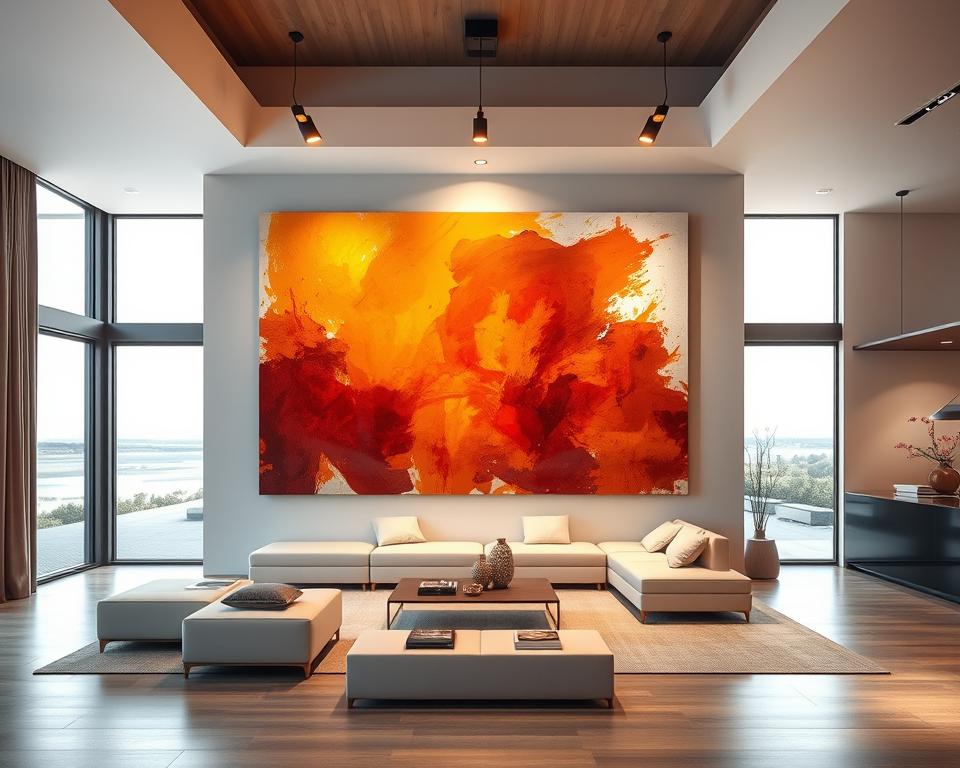
I’ve found that the right piece of large wall art can completely transform my living space from ordinary to extraordinary. When I step into my living room, my eyes immediately land on the artwork that grounds the entire room. It’s not just decoration—it’s the center of my living room decor that establishes the ambiance for everything else.
How to Create a Strong Focal Point
I found out that every well-designed room benefits from a visual anchor. My feature artwork does exactly that by commanding attention and giving the eye a place to rest. Without it, my living room felt scattered and incomplete. Now, my oversized canvas delivers that wow factor guests spot right away when they enter.
Letting Statement Pieces Speak for You
My choice of artwork says who I am better than any other element in the room. Whether I pick abstracts or tranquil scenes, my oversized art projects my personality. I’ve found that assertive pieces project confidence while gentler pieces foster calm. Each piece is a discussion spark that highlights my preferences.
Color Harmony Through Art
I use my hero art to tie together my room’s color palette. A color-forward piece can bring vitality to neutral furniture, while tonal pieces introduces polish to colorful spaces. In my open plan, artwork helps define separate areas—my abstract piece signals the lounge while a nature print defines the dining area.
How to Choose Big Canvas Art for Your Room
Finding the right artwork for my living room is like solving a beautiful puzzle. I’ve learned that choosing oversized canvas isn’t just about picking something pretty—it’s about creating harmony between the artwork and my entire living space. The process involves careful consideration of dimensions, theme, and placement to create that perfect balance.
Nailing Scale & Proportion
When I measure my wall space for large-format art, I apply the two-thirds rule. The artwork should cover about roughly two-thirds of the available wall width above my sofa or console table. For a typical 9′ sofa, I typically choose big canvas art that’s at least ~60″+ in width.
Matching Art Styles with Your Interior Design
My interior design theme guides my artwork selection every time. In my minimal rooms, I prefer geometric abstracts or black-and-white photography. For classic interiors, I find that landscape paintings or classical reproductions fit naturally. Big wall art becomes an extension of my decor personality.
Considering Light and Wall Space
Natural light plays a crucial role in how my oversized canvas prints read throughout the day. I position bright works away from direct sunlight to prevent fading. In darker corners, I gravitate toward lighter artworks with metallic accents that catch and reflect available light, making my room appear larger and warm.
Transformative Big Abstract Art Ideas
When I think about the power of big abstract wall art, I’m impressed by how a single piece can completely change a room’s energy. My living room woke up when I added a large abstract canvas above my sofa. The transformation was surprisingly fast and pronounced.
Abstract wall art offers endless possibilities for personal expression. I’ve discovered that bold, colorful pieces from artists like Mark Rothko or Jackson Pollock-inspired works bring rhythm in any space. These paintings don’t just fill empty walls; they add presence to your home.
The beauty of a big abstract painting lies in its adaptability. In my bedroom, I selected calming blues and soft grays that encourage rest. For my home office, I picked a vibrant piece with dynamic brushstrokes that keeps me motivated throughout the day. Abstract wall art invites personal interpretation, making it perfect for any room.
Size is critical when selecting artwork. I recommend picking pieces that cover at least ~65% of your wall space above furniture. Popular options include:
- Oversized canvas prints (60 inches or larger)
- Two- or three-panel sets for wider walls
- Mixed media abstracts with surface dimension
- Geometric patterns in striking hues
Big abstract wall art from curated art marketplaces delivers authentic pieces that spark discussion. These paintings create focal points that ground the room while expressing your style.
Multiple Frames or One Statement Piece?
When I’m choosing between gallery wall ideas and a single large canvas for my living room, I always ask what feeling I want. Both options can change a room, but each brings its own distinct vibe. A collection of frames creates a mosaic through multiple pieces, while a single large canvas creates immediate clarity.
Why Pick Many Instead of One
I find that gallery wall ideas shine when I want to display variety through mixed media and themes. Multiple Big Abstract Wall Art pieces let me:
- Display family photos alongside artistic prints
- Bring movement to long walls
- Mix different frame styles for an eclectic feel
- Refresh a portion without starting over
Power of One: The Statement Canvas
Oversized canvas prints grab the spotlight. I love using them when my room needs a strong focal point. A single piece simplifies the story and gives my space a sophisticated gallery feel. A hero artwork is especially effective above my fireplace or behind my sofa where it anchors the entire room.
Mixing Sizes for Dynamic Visual Interest
My favorite approach mixes the two. I pair one large canvas with accent frames nearby. This technique adds layers without noise. By maintaining a connected palette but varying frame sizes, I create harmony that reads curated yet casual.
3D Wall Art and Contemporary Installations
When I want to add real depth to my living room walls, I look beyond flat art. Modern art installations introduce 3D presence that turns rooms gallery-like. These pieces create shadows, play with light, and encourage multiple viewing angles.
Sculptural and Three-Dimensional Wall Art
I find that sculptural pieces perform wonders on plain walls. These contemporary wall hangings stand off the surface, creating changing shadows throughout the day. Popular options include:
- CB2 geometric wire forms
- Asian-inspired carved wood panels
- Flowing resin artworks
- Paper relief maps and contours
Metal and Wood Installations
Metal wall sculptures introduce sleek edge to my space. I love how copper pieces from West Elm gain character. Wood installations offer warmth—reclaimed teak branches or carved mahogany panels serve as stunning home accent artwork. These materials fit perfectly in minimalist settings where surface detail shines.
Textile Art and Woven Wall Decor
Soft textiles add cozy appeal to hard surfaces. I’ve discovered that macramé pieces from Anthropologie or handwoven tapestries bring bohemian charm without dominating the space. These contemporary wall hangings soften echo too, making spaces feel more serene. Natural fibers like jute and wool pair with both rustic and modern interiors seamlessly.
How I Position Abstract Wall Art for Maximum Impact
When I first began styling my home, I learned that placement of abstract wall art can significantly alter a room’s energy. The right positioning turns a simple piece into an interior design focal point that draws every visitor’s eye.
Above my sofa, I mount my largest statement piece at eye level when seated. This creates an intimate viewing experience while staying balanced. The bottom edge sits about 8 inches above the sofa back, giving the Large Wall Art artwork room to breathe without sitting awkwardly on the wall.
I’ve discovered that asymmetrical placement does wonders for creating visual interest. My big living room canvas doesn’t always need perfect centering. Offsetting the canvas and balancing it with a floor lamp or tall plant creates a more dynamic composition that looks curated, not strict.
In my bedroom, I select calming abstract wall art positioned lower on the wall behind my bed. Soft, muted abstracts in oceanic blues and stone greys set a restful mood perfect for rest. The artwork starts just above my headboard, making it visible when I’m lying down.
My dining room features a color-forward abstract piece mounted at typical gallery height. This placement keeps energy up and adds energy to dinner parties. Large living room wall art principles apply here too – I keep at least ~15 cm of space from the ceiling to avoid that cramped feeling.
Neutral Palettes with Gray Abstract Art
I’ve discovered that gray abstract art provides a flexible base for any living room decor. These neutral pieces adapt easily in my space, adapting to seasonal changes and new furniture while maintaining their sophisticated appeal. The beauty of neutral tones lies in their ability to complement rather than compete with existing design elements.
Harmonizing Statement and Soft Tones
When I select big abstract wall art in gray tones, I find it lands right in the sweet spot between standing out and supporting balance. My favorite approach includes:
- Charcoal + cream pairings for depthful contrast
- Choosing silvery frames to tie in hardware throughout the room
- Mixing light, mid, and dark greys for depth without overwhelming the space
Creating Sophistication with Monochromatic Schemes
I’ve learned that monochromatic schemes using gray abstract art improve my living room decor to museum-like calm. Black-and-white photography paired with grayscale paintings creates a cohesive look that feels intentional and refined. Big abstract wall art in these tones becomes the anchor, allowing me to layer textures through pillows, throws, and rugs without breaking cohesion.
“Art should comfort the disturbed and disturb the comfortable” – Banksy
This approach lets decorative mirrors with minimal frames echo the art while reflecting light to brighten the space naturally.
Decorative Wall Murals as Home Accent Artwork
When I want to make a dramatic change in my living room, decorative wall murals open up options. These large-scale statements serve as both functional art and talking points. From breathtaking photography to artistic mirrors, I’ve discovered that the right mural can totally reshape the feel of any space.
Photography and Landscape Options
I find photography murals bring both elegance and personal character to my walls. Whether I pick magazine-grade city scenes or serene nature scenes from photographers like Ansel Adams, these pieces add depth and warmth to my room. Big wall art featuring landscapes creates windows to other worlds right in my living space.
My favorite photography options include:
- Black and white architectural prints|from cities like Paris
- Colorful sunset scenes over ocean horizons
- Mountain ranges that bring natural grandeur indoors
- Retro travel art from brands like TWA
Custom or Ready-Made?
I’ve learned that choosing between custom and ready-made pieces comes down to cost and taste. Custom decorative wall murals from studios like boutique muralists deliver tailor-made impact. Ready-made options from retailers like well-known brands balance quality and value.
Reflective Statement Pieces
Mirrors pull double duty in my decor strategy. I use ornate frames from brands like design houses to turn reflection into art. These reflective surfaces open up the space while adding artistic flair to empty walls.
Wrapping Up
I’ve discovered that big statement art does more than just fill empty spaces. It becomes the heartbeat of my living room, setting an ambiance that speaks to everyone who enters. From color-rich abstracts to sleek metal sculptures, each piece I choose shares a part of my taste and turns bare walls into conversation pieces.
Living room wall art has taught me that size matters when making a statement. My journey through different options proved that oversized canvases command attention while gallery walls create intimate conversations. Contemporary wall hangings add contemporary attitude to classics, and neutral gray abstracts add sophistication without stealing the palette.
The right big canvas creates a signature interior. I’ve learned to trust my instincts when selecting pieces that feel like me. Whether I’m drawn to dramatic murals from West Elm, the key is choosing artwork that makes me smile every time I walk through my door. My walls now speak my language, and every piece contributes to the unique character of my home.
FAQ
What size wall art should I choose for my living room?
I advise measuring your wall space first and accounting for the scale of your furniture. For areas above sofas, I typically recommend pieces that are about two-thirds the width of the sofa. One substantial piece shines on expansive walls, while smaller spaces might benefit from gallery wall arrangements. Remember, large canvases can make a bold statement in rooms with taller ceilings.
How do I create an interior design focal point with wall art?
I’ve found that positioning a large statement canvas or hero artwork above your main furniture piece is effective. The key is choosing artwork that draws the eye immediately when entering the room. I like to select pieces with colors that either complement or provide subtle contrast my existing palette, ensuring the art reads as the focal point without feeling heavy.
Is one large canvas better than many small ones?
This ultimately depends on your personal style and wall dimensions. I love using a single big canvas art for dramatic impact, especially above sofas or beds. However, gallery wall ideas work beautifully for creating layered interest along hallways or stairways. When I’m working with irregular wall spaces, I often blend sizes to create a dynamic look.
What are the best modern art installations for contemporary homes?
I’m particularly fond of sculptural metal and wood installations that bring 3D interest to flat walls. Three-dimensional pieces and contemporary wall hangings build tactile presence. For a softer approach, I sometimes incorporate textile art or woven wall decor, which introduces coziness while keeping the look contemporary.
How can I incorporate gray abstract art into my living room decor?
Gray abstract art is incredibly versatile! I use it to build elegant monochrome looks that read classic and calm. These neutral pieces pair well with both vivid and muted color palettes. I often combine gray abstracts with metal finishes or timber details to add depth while keeping cohesion and polish.
Murals in compact living rooms?
Absolutely! I’ve discovered that the right mural can actually make a small space feel larger. Photography murals with depth, like landscapes, create an illusion of extended space. For compact areas, I recommend light palettes or those with vertical elements that emphasize height, making ceilings appear higher.
What height should I hang art?
I typically hang artwork so its center sits at eye level, which is usually 57–60 inches from the floor. However, when placing art above furniture, I leave about 15–20 cm between the furniture top and the artwork’s bottom edge. This creates a visual connection while preserving breathing room.
Is mixing styles okay?
Definitely! I love mixing styles to create an curated look. The trick is finding a unifying element — whether it’s a color scheme, frame style, or subject matter. I might pair black-and-white photography with bold abstracts, as long as they harmonize in tone or complement each other in scale and proportion.
Timeless art choices?
I prioritize selecting pieces that truly resonate with me personally rather than chasing fads. Timeless picks like quality landscape photography, well-executed abstracts, and monochrome works tend to have lasting appeal. I also invest in statement pieces from reputable sources like HOMMÉS Studio, which offers collections that maintain their relevance over time.