
Transforming a basement into usable living space does more than improve day-to-day use; it can also raise your home’s resale appeal. This guide shares essential tips and ideas for basement renovations. Begin by measuring the area, sketching a layout, and deciding on the level of finish you want.
Explore Basement Remodeling in Redmond
Proper preparation is critical for a DIY basement remodel. First, test for moisture using a plastic sheet. Ensure you have the required permits and gather essential tools like a circular saw and safety gear. Using a roll-off dumpster can make cleanup easier and help maintain a safer job site.
The remodeling process centers on three major areas: walls, floors, and ceilings. You’ll need materials such as drywall sheets, studs, insulation, paint, and LED lighting. Keep your budget in mind, because costs can range from $7,000 to $50,000, depending on the scope and finishes. Larger and more customized builds usually come with higher overall expenses.
Strike a balance between DIY work and professional help for framing, electrical, and plumbing. Apply these renovation tips and ideas to build a clear plan before you begin. Planning ahead can help you avoid delays, overspending, and unnecessary stress later on.
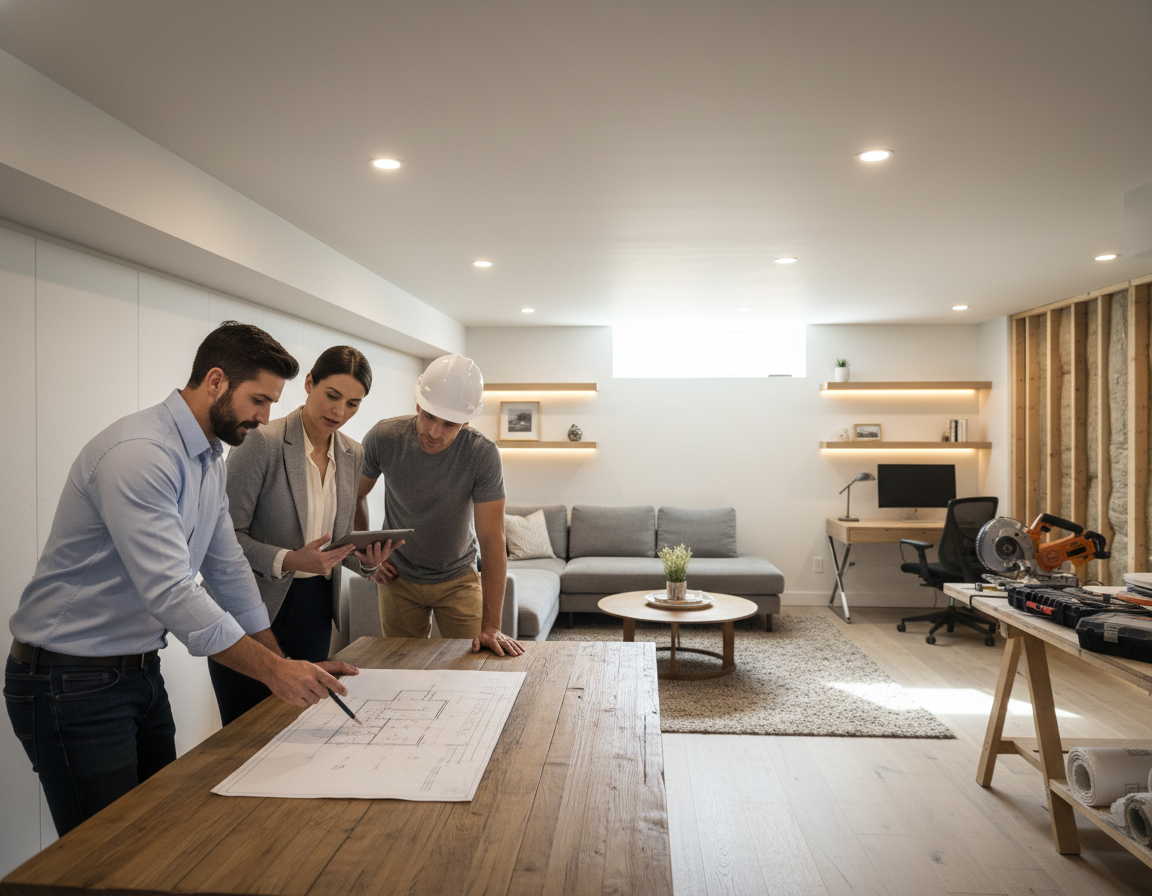
Planning And Permits For A Successful Basement Renovation
Beginning a basement renovation requires a clear plan and realistic goals. Start by measuring the square footage and sketch a layout. Identify spaces for an entertainment room, home gym, guest suite, office, or wet bar. Record the ceiling height, ductwork, beams, and support posts so your design stays practical.
Conduct a quick moisture check by taping a plastic sheet to a wall or floor for 48 hours. If moisture appears, you may need a dehumidifier, sump pump, or professional waterproofing. Minor fixes might cost $250–$600, while professional waterproofing can range from $1,900 to $6,400. Handling moisture problems up front can help you avoid expensive repairs later.
Before you order materials or hire contractors, prioritize your basement remodeling checklist. Focus on moisture control, insulation, and a proper subfloor first. Plan the placement of electrical panels, plumbing runs, and any new egress windows early. Decide on wall and ceiling styles, insulation type, and flooring in advance to avoid delays.
Your budget will largely determine the scope and finish level of your basement. Costs vary, with basic remodels ranging from $7,000 to $15,000, mid-range projects from $15,000 to $30,000, and high-end builds from $30,000 to $50,000+. Adding a bathroom, an egress window, or custom millwork increases costs. Local labor rates also matter, so build in a 10–20% contingency for unexpected issues during demolition.
Consider using a simple table to compare common budget drivers and their likely impact. A quick comparison can help you understand where your timeline and budget may expand.
| Item | Usual Cost Range | Schedule Impact |
|---|---|---|
| Moisture control and waterproofing | $250–$6,400 | 1–3 weeks depending on scope |
| Bathroom addition or plumbing work | $3,000 to $12,000 | 2 to 4 weeks including inspections |
| Egress window | $1,500 to $4,500 | 1–2 weeks |
| Drywall and insulation | $2,000–$8,000 | 2–3 weeks |
| Flooring (subfloor + finish) | $1,000–$6,000 | 1 to 2 weeks |
Getting permits is vital for safety and resale value. Visit your local building department website to learn which permits are required. Check compliance with minimum ceiling heights, egress window rules, outlet spacing, and circuit requirements for appliances. Schedule inspections at major milestones to avoid rework.
Organize your basement remodeling timeline into stages: assessment and design, permitting, rough-in work, insulation and drywall, finishes, and final inspections. Allow additional time for permit approvals and unexpected repairs. Defined phases help keep contractors coordinated and can reduce delays.
Request quotes from licensed contractors and compare bids line by line. Ask about their experience with basement renovation ideas similar to yours. Confirm that the bids include permit pulls, inspections, and cleanup so you have a more predictable total cost and schedule.
How To Remodel A Basement
Remodeling a basement takes careful preparation and planning. Start by clearing out clutter and debris. Sweep and vacuum the area thoroughly. Then perform a moisture test, such as the plastic sheet method, to locate any damp spots. Fix those issues first to avoid expensive repairs later.
Preparing The Area And Managing Moisture
Examine foundation walls and floors for cracks. Seal small cracks with epoxy or hydraulic cement. For ongoing water problems, consider interior drainage, exterior grading, or a sump pump. If the issue is severe, consult a professional waterproofing company for an evaluation and cost estimate.
Carry out moisture tests in multiple spots and run a dehumidifier during the remodeling process. When installing a subfloor, check for dips greater than 3/16″ and level them with self-leveling compound. This creates a solid base for your panels. Proper moisture control is critical for protecting finishes and insulation.
Choosing Materials And Finishes
Select wall systems according to budget and performance. XPS foam against foundation walls, followed by framed studs with insulation, offers a strong balance of thermal performance and moisture resistance. Drywall delivers a clean, finished look, while plaster adds durability. Open or exposed finishes may suit an industrial-style design.
Ceiling selections influence both looks and utility access. Drop ceilings offer easy access, while drywall ceilings look seamless but require more labor. For low ceilings, recessed lighting can help maximize brightness and usable space.
Start floor systems with a moisture-resistant subfloor, such as polystyrene insulation under plywood. For finish materials, luxury vinyl plank is waterproof and durable, tile handles humidity well, and carpet tiles add warmth. Apply primer and one to two paint coats in light shades with satin or eggshell finishes for easier cleaning.
Tools, Equipment Rentals, And Waste Management
Gather essential tools such as a circular saw, masonry drill and bits, nail gun, hammer, level, tape measure, utility knife, sawhorses, and a ladder. For ceiling drywall, rent a T-brace or a drywall lift. Protect yourself with goggles, gloves, dust masks, earplugs, and durable clothing.
Bring in specialty rental equipment when the job requires it. Manage waste with a roll-off dumpster for wood, drywall, insulation scraps, and other refuse. A properly sized dumpster keeps the site safer and makes cleanup more efficient during diy basement remodeling.
Construction Stages And Technical Work
Start with a detailed plan that aligns with your basement remodeling checklist and timeline. It is important to prioritize moisture control, code compliance, and utility access before you move into heavy construction. That foundation can prevent expensive setbacks later.
Framing and insulation techniques
Start by marking a line 4″ from the foundation for the bottom plate. Use pressure-treated lumber to resist moisture. Secure the bottom plate with masonry drill holes and concrete screws, ensuring it is level and shimming where needed.
Install 2×4 top and bottom plates, marking studs every 16″. Cut studs to length and fasten them to the plates. Be sure to leave access panels for future maintenance of plumbing or electrical runs.
For insulation, you may either affix extruded polystyrene foam directly to the foundation walls and seal seams with caulk before framing, or fit fiberglass batt or rock wool inside stud cavities. Measure wall-to-ceiling height minus 1/4″ when trimming rigid boards for a snug fit. A careful fit helps improve both comfort and efficiency.
Electrical, Plumbing, And HVAC Planning
Once framing is complete, run circuits and install boxes for outlets, switches, and fixtures. Plan outlet placement around intended uses such as a home theater, bar, or playroom. Select fixtures in advance, since wiring requirements depend on them.
Observe local codes for outlet spacing and GFCI protection. Permits and inspections are required. Licensed electricians should handle final connections and panel work for safety and compliance. That approach improves safety and increases the chances of passing inspection smoothly.
With plumbing, try to keep drain lines near existing sewer pipes to limit concrete cutting. If fixtures will sit below sewer grade, specify a sewage ejector pump or macerator and add shutoff valves for maintenance access. Planning this early can prevent expensive revisions later.
Coordinate HVAC work to extend ductwork, add returns, and position registers for even heating and cooling. Include ventilation and dehumidification in the design to protect comfort and finishes. Good airflow and humidity control help make the basement comfortable in every season.
Drywall, Ceiling, And Subfloor Installation
Level the slab and fill dips greater than 3/16″ with self-leveling compound. Apply polystyrene insulation to the slab if using a floating subfloor, then secure the plywood subfloor with concrete screws. A level base helps every finish installed afterward.
Install drywall over the studs, choosing a horizontal layout to reduce seams if preferred. Cut openings for utilities and leave a 1/2″ gap at the floor to reduce moisture wicking. Check that screw heads are flush before applying tape and joint compound, then sand, prime, and paint. Taking your time here helps create a smoother finished appearance.
For ceilings, choose either a drop ceiling with grid and tiles for utility access, or drywall for a seamless appearance. An open, painted ceiling can also disguise ducts while preserving headroom. The best choice depends on your priorities for style, access, and height.
Flooring Installation And Finishing Touches
Pick moisture-resistant flooring such as LVP, tile, or specialized carpeting. Follow the manufacturer’s directions and use the proper underlayment for comfort and insulation. Carpet tiles can be especially useful because they are easy to replace in high-traffic areas. Long-lasting flooring can help reduce future maintenance and replacement costs.
Complete the room with trim, baseboards, and paint in light tones to brighten the basement. Add recessed lighting, dimmer switches, and accent fixtures to create layered illumination. Well-chosen finishing touches help the new room feel complete and inviting.
Use a basement remodeling checklist to confirm each task, and share your basement remodeling timeline with contractors so plumbing, electrical, and HVAC work stay coordinated. For regulated or high-skill tasks, hire experienced basement remodeling contractors to support safety and code compliance.
Basement Design Inspiration And Project Management
A successful basement transformation depends on clear design choices and a detailed plan. Start by selecting a primary use, such as a home theater, guest suite, office, or gym. Then map out zones for seating, storage, utilities, and circulation. Use light paint, layered lighting, and moisture-resistant finishes to keep the space bright, practical, and durable.
Layout Ideas And Functional Basement Designs
Begin by reviewing ceiling height, egress needs, and existing mechanical systems. For low ceilings, consider recessed lighting and shallow-profile fixtures. Plan outlets and lights around furniture, televisions, and workout equipment to avoid awkward cords and extra work later. Early layout planning makes the finished room more useful.
Add built-ins and flexible furniture to make rooms more versatile. A wet bar or kitchenette pairs well with a family room, while a guest suite benefits from a small bathroom and closet. Choose moisture-resistant flooring such as luxury vinyl or sealed concrete for long-term value. Multi-use planning can help you get more from the same square footage.
Timeline And Contractor Coordination
Basement project schedules depend heavily on scope. A basic finish may take a few weeks, while mid-range to high-end projects often stretch across several weeks or a few months. Sequence the work around clear milestones: assessment and permits, moisture remediation, framing and insulation, utility rough-ins, inspections, and finishes. A phased schedule helps everyone understand what comes next and when.
Submit permits early and book trades such as the plumber, electrician, and HVAC technician before walls are closed. Use a checklist to track materials, inspections, and milestones. Renting a dumpster during demolition can keep the site organized and speed cleanup. Strong planning between trades can prevent costly delays and repeated work.
Working With Contractors And Renovate Builders
Use licensed experts for electrical, plumbing, HVAC, and structural tasks. Ask for references, verify insurance, and request detailed written estimates that outline scope, timeline, payment terms, and change-order procedures. Compare bids carefully to find the best fit. Detailed paperwork helps reduce misunderstandings and keeps the job on track.
Renovate Builders may help handle permitting, code compliance, and full-service remodeling. Use contractor-provided renderings or 3D tools to preview the design and reduce change orders. Clear communication from the start improves the odds of strong basement renovation before-and-after results.
| Project Phase | Typical Duration | Key Actions | Who To Hire |
|---|---|---|---|
| Assessment & Permits | 1 to 3 weeks | Site review, measurements, submit permits | General contractor or design-build firm |
| Moisture Repair | 1–2 weeks | Repair leaks, add drainage, and install vapor barriers | Waterproofing expert or foundation contractor |
| Framing and Utility Rough-In | 2–4 weeks | Framing, electrical, plumbing, HVAC rough work | Framer, electrician, plumber, HVAC tech |
| Inspections and Drywall | 1–3 weeks | Inspections, install drywall, ceilings, subfloor | Drywall crew, building inspector |
| Finishes and Final Inspection | 2–6 weeks | Flooring, painting, trim, fixtures, and final inspection | Finish carpenters, painters, and flooring installers |
Final Thoughts
A strong basement remodel begins with careful planning. Start by measuring the space and conducting moisture tests. Create a detailed checklist that includes required permits and a realistic timeline. Handling water issues and insulation early is one of the best ways to protect your investment.
Select durable finishes such as extruded polystyrene, luxury vinyl plank, or tile. Early utility planning can save time and improve electrical, plumbing, and HVAC installation. That preparation can also reduce costly adjustments later.
Establish a realistic budget based on the project scope and desired finishes. Costs can range from $7,000–$15,000 for basic projects to $30,000–$50,000 or more for high-end builds. Include contractor labor, permit fees, and contingency funds for surprises. A well-planned budget gives you more control throughout the remodel.
For specialized tasks, use licensed professionals to ensure code compliance and safety. For full-service projects, choose established firms with verified licenses and references. For DIY tasks, follow safety practices, rent the right tools, and arrange proper waste removal. Combining homeowner effort with professional guidance often produces stronger results.
Maintain organization with a concise checklist and a realistic timeline. With careful planning, solid moisture control, and durable material choices, homeowners can turn underused basements into valuable living spaces. The right strategy delivers comfort, function, and added value.
Frequently Asked Questions
What Does It Cost To Remodel A Basement?
What Is The Typical Timeline For A Basement Renovation?
Are Permits Required To Finish A Basement?
What Is The Best Way To Test Basement Moisture Before Remodeling?
What Are Common Solutions And Costs For Moisture Problems?
What Walls, Ceilings, And Flooring Materials Are Best For Basements?
Can I Do A Basement Remodel As A DIY Project?
Which Tools And Safety Gear Are Needed For A Basement Remodel?
How Should I Plan Layout And Intended Uses For My Basement?
What Insulation And Framing Techniques Work Best For Basements?
How Do I Handle Electrical, Plumbing, And HVAC In A Basement Remodel?
What Flooring Installation Steps And Finishing Touches Should I Expect?
Will Finishing My Basement Add Value To My Home?
Is Renting A Dumpster Worth It For A Basement Remodel?
What Is The Best Way To Choose Basement Remodeling Contractors?
Which Checklist Items Should I Track During A Basement Remodel?
Related: Adding a Garage Conversion With Backyard Cottage Construction in Redmond